
Ambitious biometrics projects promise transformation, but struggle with messaging
Advances in biometrics and technologies behind digital identity are making previously unattainable goals possible. The top articles of the week on Biometric Update reflect aspirations for tight border control, cross-border interoperability of digital IDs, AI workers without an avalanche of fraud, age controls on the internet and even safer streets. Hurdles around surveillance and public communication threaten to trip up several of these projects, however, with potential ripples throughout the identity industry.
Fully biometric borders
The Mobile Identify app, developed for CBP to identify individuals by their face biometrics in real-time, has been removed from the Google Play Store. It was there for use by local U.S. police deputized by ICE as part of one of the most expansive immigration enforcement campaigns in history. But its availability and use may have violated U.S. law, and contributed to fears about public surveillance by the government.
The FBI has transformed its OSINT operations with commercial tools like Clearview AI’s facial recognition which enable investigators to rapidly move from an unidentified face or online alias to a detailed portrait of a person’s digital activity and associations. The Privacy and Civil Liberties Oversight Board is concerned.
And CBP plans to replace ESTA, which has been prone to fraud of all sorts, with a mobile app to make it easier to collect identity data, geolocation, social media history and device information from foreign visitors to the U.S.
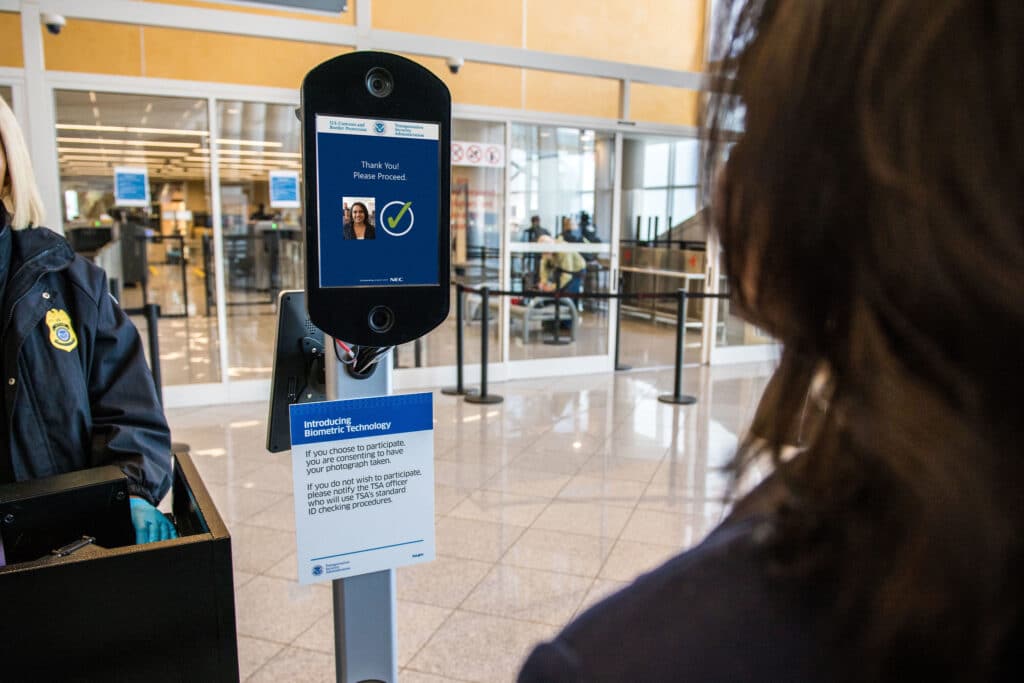
Orlando International Airport is pilots of face biometrics boarding systems from iProov, Aware and a consortium including Paravision in parallel for departing flights. The pilots are being run in partnership with CBP for America’s Biometric Exit border control program. Clear’s biometric gates reached two more airports in partnership with TSA, as well.
Cross-border interoperability and mutual recognition
A digital partnership between the EU and Canada is expanding with an MoU to align on digital credentials, digital identity wallets and trust services. Mutual recognition of digital IDs could come down the line, and in the shorter term, pilots for cross-border interoperability.
ID for the UK
UK lawmakers spent three hours mostly talking at each other about the government’s ambition to reduce illegal immigration and improve public services with a mandatory national digital ID in a committee hearing. Several legitimate concerns were raised, then set aside so Labour and opposition MPs could repeat speculative talking points.
A more productive discussion was held between ADVP Chair David Crack and Tony Blair Institute Director of Government Innovation Alexander Iosad on the latest episode of the Biometric Update Podcast. They find significant common ground, but also disagree on important elements of how digital should be delivered.
A whole new workforce
Voice AI models will be commoditized within the next few years, according to ElevenLabs CEO Mati Staniszewski tells TechCrunch’s Equity podcast. The future of his firm, valuated at $6.6 billion, lies in deepfake detection and conversational AI agents, he believes.
AI agents have already entered the workforce, and loom as the next potential disruption to the global economy. But some indications, like research from Carnegie Mellon University, suggest it has mostly failed so far. Au10tix notes that AI agents are delivering productivity in fraud.
Reigning in social media
Most young teenagers in Australia are locked out of social media as of this week, but New Zealand’s MyMahi is worried that indigenous and underserved teens who are 16 and therefore allowed to have accounts still won’t be able to. The company’s updated AATT evaluation shows its effectiveness for its target student population.
Much of the public seems to have had little understanding of what to expect with the age assurance requirement and Reddit comments reflect frustration and a perceived lack of communication from the government.
On a recent episode of the Biometric Update Podcast, Jake Parker, Senior Director of Government Relations at the Security industry Association (SIA), looks at the pros and cons of facial age estimation, and discusses key privacy and security considerations for companies adopting it.
Expanding facial recognition questions
The revelation that the UK’s Police National Database facial recognition function is powered by an algorithm with significant demographic bias has sparked questions, not least of which from the ICO and the Association of Police and Crime Commissioners. They may have even more after Cognitec confirmed to Biometric Update that the algorithm concerned was licensed in 2021, when the biometrics community was in the midst of grappling with the problem of algorithmic bias. Home Office never updated it before sending it to the NPL for assessment.
Please let us know if you come across any podcasts, online workshops or other content we should share with the people in biometrics and the digital identity community in the comments below or via social media.
Related Posts
-
 December 13, 2024
 -
 January 7, 2025
 -
 March 11, 2025
 -
March 17, 2025
-
 January 17, 2025
 -
 November 24, 2025
Article Topics
biometrics | digital ID | digital identity | facial recognition | week in review

Comments