
TSA confirms passenger identity data used to support ICE enforcement
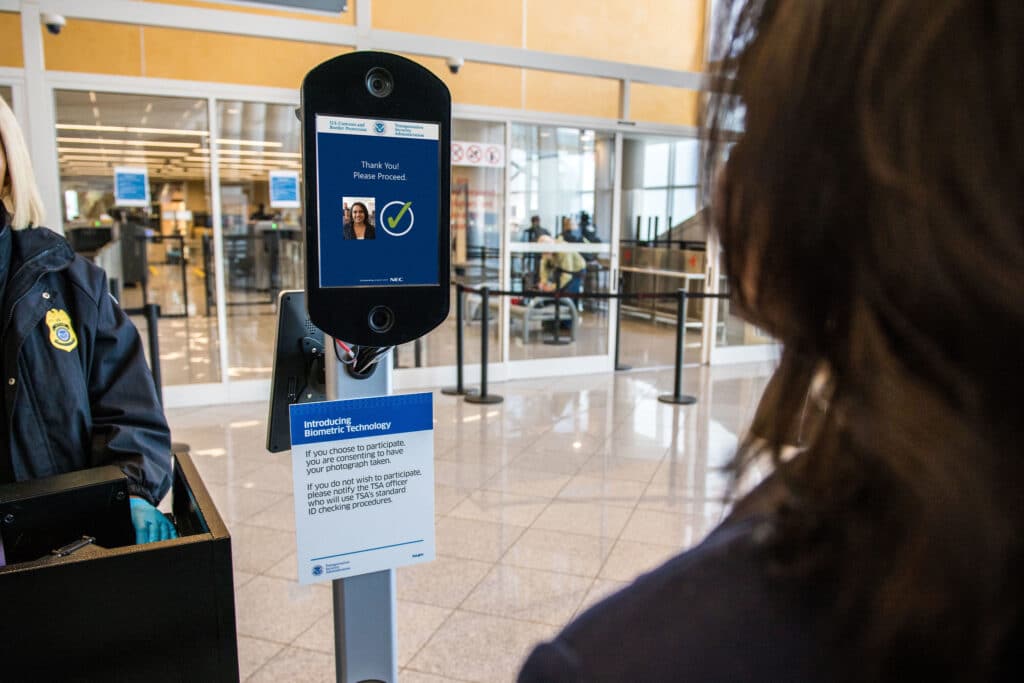
When the House Committee on Homeland Security convened this week to oversee the Department of Homeland Security (DHS), lawmakers expected to examine aviation security, cyber threats, and emerging technologies. Instead, the hearing exposed a deeper shift underway inside DHS: the transformation of routine air travel identity checks into a domestic enforcement tool.
As TSA prepares to launch its new ConfirmID identity verification program and fully enforces REAL ID requirements, a senior TSA official confirmed that passenger data is “absolutely” being used to support Immigration and Customs Enforcement (ICE) deportation operations — collapsing long-standing boundaries between transportation security, biometric authentication, and immigration enforcement.
When Transportation Security Administration (TSA) Acting Director Ha Nguyen McNeill was pressed on reports that ICE is using domestic flight passenger information to support deportation operations, she did not deny cooperation. Instead, she defended it as legitimate intra-departmental coordination and framed it as part of DHS’s overall mission set.
In response to lawmakers’ questions, McNeill said TSA assistance to ICE is “absolutely within our authorities” when it involves sharing passenger information for immigration enforcement operations.
At the same time, McNeill drew a line between bulk transfers and case-by-case validation, pushing back on claims that TSA routinely transmits all passengers’ personally identifying data to ICE.
“That is not what is occurring. We don’t send the information to ICE; we help ICE check against information,” she shot back at lawmakers.
The distinction matters because it effectively describes TSA’s role as a verification node inside DHS’s broader data ecosystem. It’s not necessarily a pipeline that automatically feeds ICE but is a mechanism ICE can query when it is attempting to confirm identities tied to enforcement actions.
McNeill’s broader justification left little doubt about the purpose. “We are supporting the mission of our colleagues at the Department of Homeland Security, and that includes enforcement of immigration laws,” she told the committee.
That framing — DHS mission support first, aviation-traveler privacy second — is exactly what civil liberties critics warn can normalize “mission creep,” where systems built for transportation security become functional infrastructure for domestic immigration enforcement, often without a clear public record of the rules, auditability, or limits on use.
When questioning came around to REAL ID and ConfirmID, it became clear that access to air travel is moving away from document-based identity alone and toward layered identity verification systems that carry privacy, equity, and civil liberties implications well beyond the airport checkpoint.
McNeill framed REAL ID enforcement as a direct outgrowth of post-9/11 security doctrine. She reminded lawmakers that the REAL ID Act of 2005 was enacted “in response to the 9/11 Commission Report recommendations aimed at combatting fraudulent identity documents and ensuring passengers are who they say they are.”
McNeill explicitly invoked the Commission’s core insight about the role of identity in terrorism, quoting its conclusion that “for terrorists, travel documents are as important as weapons.” That logic, she argued, remains foundational to TSA’s approach two decades later.
“Under the leadership of Secretary Noem, since May 2025, TSA is fully enforcing its statutory requirements under the REAL ID Act of 2005,” McNeill told lawmakers, emphasizing that identity assurance is no longer a future goal, but rather an active operational requirement at airport checkpoints nationwide.
According to McNeill, enforcement is already widespread. “Currently, most travelers [about 94 percent] present either a REAL ID-compliant or another acceptable form of ID,” she testified.
That remaining gap, however, has become increasingly consequential as passenger volumes reach record levels and TSA prepares for large-scale global events.
To address REAL ID non-compliance without denying air travel outright, TSA is rolling out a new alternative identity pathway. McNeill described TSA ConfirmID as “a new modernized alternative identity verification system to enhance and streamline identity verification for travelers that do not have an acceptable form of ID.”
Beginning February 1, travelers who arrive at a checkpoint without compliant identification will have the option of paying a $45 fee and undergoing additional verification.
“Travelers who do not present an acceptable form of ID at TSA checkpoints and still want to fly, have the option of paying a $45 fee and undergoing the TSA ConfirmID process,” McNeill said.
TSA has been careful to frame the program as a cost-recovery measure rather than a penalty. “The fee ensures that the cost to cover verification of an unacceptable ID will be borne by the non-compliant traveler, not the American taxpayer,” McNeill said.
From an operational perspective, ConfirmID is designed to preserve throughput at checkpoints while maintaining identity standards. From a civil-liberties perspective, however, it represents a formalization of pay-to-verify access to mobility, a development that lawmakers are only beginning to scrutinize.
Although McNeill’s testimony focused on efficiency and security, lawmakers used the hearing to probe broader implications of expanding identity verification regimes.
Democrats on the committee questioned whether identity-based screening systems could burden travelers, normalize continuous identity checks, or create inequities for those unable to afford additional fees.
These concerns did not hinge on the technical details of ConfirmID, which TSA has not publicly disclosed in full, but on the principle embedded in McNeill’s own framing: “We must ensure that everyone who flies is who they say they are.”
That assertion reflects a philosophical shift that extends beyond aviation security.
Identity assurance is no longer episodic; it is becoming a condition of participation in public life, with authentication systems mediating access to movement itself.
Lawmakers also raised questions about how identity data generated through TSA authentication systems is used and shared across DHS. During questioning, McNeill clarified that TSA does not send passenger data directly to Immigration and Customs Enforcement (ICE) but may assist ICE in checking identity information when requested.
While TSA characterizes that practice as limited and controlled, civil liberties advocates have long warned that once identity systems exist and are interoperable, mission boundaries become matters of policy restraint rather than technical limitation.
Notably, McNeill’s testimony avoids explicit references to biometric modalities such as facial recognition or fingerprints, instead relying on the broader language of “identity verification.” That omission is itself revealing. TSA’s public posture continues to emphasize outcomes – verifying identity – rather than the underlying technologies used to achieve it.
For lawmakers concerned about privacy, framing complicates oversight. Without clear disclosure of how identity verification is performed, Congress must rely on general assurances rather than technical accountability.
The hearing underscored this tension. As identity verification systems expand, lawmakers are being asked to evaluate not only how they function, but how they reshape the relationship between the state and the traveling public.
The hearing did not produce new legislative mandates, but it clarified where future pressure points will lie. As TSA implements ConfirmID and continues full REAL ID enforcement, lawmakers are likely to revisit questions of access, equity, data use, and civil liberties protections.
For now, TSA’s position is clear. Identity assurance is foundational to aviation security, and alternative verification pathways are necessary to manage non-compliance at scale. As McNeill told the committee, TSA’s objective is to ensure that security standards are met while maintaining system efficiency.
What remains unresolved – and increasingly urgent – is whether Congress will articulate clearer statutory limits on how identity verification systems evolve, how they are monetized, and how the data they generate can be used beyond their original purpose.
Beginning February 1, millions of travelers will encounter the practical consequences of those unresolved questions at airport checkpoints.
What the hearing ultimately revealed is not just a debate over airport screening, but a quiet redefinition of how identity functions inside the federal government. Systems built to ensure passengers are “who they say they are” are now being used to support immigration enforcement, with TSA openly acknowledging its role in assisting ICE’s deportation mission.
As ConfirmID launches and REAL ID enforcement tightens, identity verification is no longer a temporary checkpoint requirement, but a persistent condition attached to movement itself.
Whether Congress is willing to set enforceable boundaries around how authentication data is used or allows those boundaries to be defined internally by DHS, it will determine whether these systems remain limited security tools or become durable infrastructure for domestic enforcement.
Related Posts
-
 November 20, 2025
 -
April 15, 2025
-
 January 16, 2026
 -
 January 8, 2026
 -
 February 4, 2025
 -
 November 13, 2025
Article Topics
biometric identification | biometrics | CBP | DHS | ICE - U.S. Immigration and Customs Enforcement | identity management | immigration | Real ID | TSA | TSA ConfirmID

Comments