
Congress deepens investment in DHS biometrics
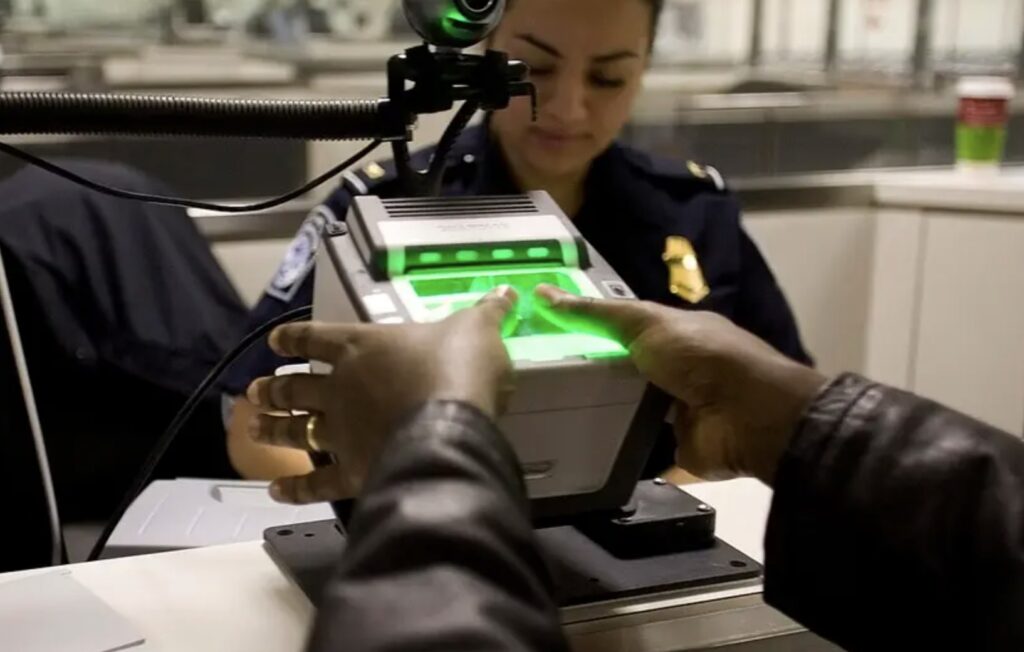
As lawmakers race to avert a government shutdown ahead of the January 30 funding deadline, negotiators have released the FY 2026 Homeland Security Appropriations Act agreement text, quietly cementing biometrics as one of the most structurally embedded and politically sensitive technology pillars inside the Department of Homeland Security (DHS).
Spread across DHS components and funding mechanisms, biometric identity systems now sit at the center of immigration enforcement, border processing, aviation security, and identity vetting, with Congress using appropriations language not only to fund these systems, but also to impose guardrails on how they may be modernized, shared, or reorganized.
The bill text, published as part of the joint explanatory statement accompanying the consolidated appropriations package, reflects a striking dual posture.
On the one hand, Congress continues to pour billions of dollars into biometric infrastructure, advanced identity verification, and AI-enabled screening tools. And on the other hand, lawmakers repeatedly signal concern that poorly planned reorganizations, opaque data-sharing practices, or mission creep could weaken accountability, civil liberties protections, and operational continuity.
Nowhere is that tension more evident than in Congress’s treatment of the DHS Office of Biometric Identity Management, or OBIM, which operates the department’s core biometric systems, including the Automated Biometric Identification System (IDENT) and its successor, the Homeland Advanced Recognition Technology (HART) platform.
The agreement provides $271 million for OBIM in FY 2026, underscoring its continued centrality to DHS operations. At the same time, lawmakers included explicit language warning against any abrupt transfer or restructuring of biometric authorities without detailed planning and congressional notification.
Under the agreement, DHS may not move biometric identity functions out of OBIM or substantially reorganize them without first submitting a detailed plan demonstrating that any transfer would be seamless, preserve mission effectiveness, and maintain oversight, privacy, and civil liberties protections.
The language reflects growing congressional unease with proposals floated within the executive branch to consolidate or realign biometric authorities, particularly if such changes could dilute accountability or fragment control over some of the federal government’s most sensitive identity systems.
The bill also continues targeted investment in modernizing DHS’s biometric backbone. Within the Management Directorate’s Procurement, Construction, and Improvements account, the agreement includes $25 million specifically to support continued development of HART.
That funding reinforces Congress’s intent to see the long-delayed replacement for IDENT move forward, even as lawmakers remain cautious about expanding HART’s role without stronger oversight mechanisms in place. Congress’ civil liberties concerns are especially pronounced in provisions governing how biometric data may be used in high-stakes immigration and family separation contexts.
The agreement requires DHS to notify the Office of Inspector General and the Office for Civil Rights and Civil Liberties within 24 hours if biometric information from HART or foreign biometric intelligence sharing is used to separate a minor child from a parent or legal guardian, subject to limited exceptions.
The unusually direct reporting mandate reflects sustained scrutiny of DHS’ use of biometric data in enforcement decisions involving families.
At the Transportation Security Administration (TSA), Congress continues to back biometric identity verification as a core element of aviation security, while layering in new oversight expectations. The agreement provides $10.6 billion for TSA Operations and Support, alongside $330.2 million for procurement, construction, and improvements and $24 million for research and development.
Within those totals, lawmakers allocate $15 million for Credential Authentication Technology (CAT) systems used at airport checkpoints, $300 million for checkpoint screening modernization, and $12 million for research into AI-enhanced screening technologies.
CAT systems are designed to validate the authenticity of identity documents and interface with Secure Flight and other backend systems, forming the technical foundation upon which biometric matching can be layered.
TSA is also directed to continue piloting biometric identity verification technologies at checkpoints, but only with robust privacy safeguards in place and with a required report to Congress within 180 days of enactment that details data use, retention practices, and impact to civil liberties.
The bill’s language makes clear that biometric expansion in aviation security is no longer viewed as experimental or peripheral. Instead, Congress treats biometric identity verification as a permanent feature of TSA operations, while simultaneously signaling that unchecked deployment without transparency or public accountability will not be tolerated.
Customs and Border Protection’s (CBP) biometric programs receive similarly sustained backing, particularly those tied to entry-exit tracking and traveler identity verification. The CBP fee-funded programs table explicitly lists the 9-11 Response and Biometric Exit Account, placing biometric exit alongside passenger inspection and agriculture inspection fees as a standing operational cost.
The continued reliance on fee-funded mechanisms underscores how deeply biometric exit has been integrated into CBP’s core mission, even as full nationwide deployment has faced persistent operational and infrastructure challenges documented by DHS oversight bodies.
Despite its central role in CBP’s biometric exit strategy, the 9-11 Response and Biometric Exit Account has long been a source of structural friction rather than a stable foundation for nationwide deployment. The account is funded through passenger fees rather than direct appropriations, tying biometric exit operations to fluctuations in air travel volume and airline compliance.
Oversight bodies have repeatedly found that this funding model complicates long-term planning, limits CBP’s ability to scale infrastructure consistently across airports, and leaves biometric exit deployments unevenly distributed.
Rather than supporting a uniform national system, the fee-funded structure has contributed to a patchwork of deployments that vary by airport, airline participation, and available technology, undermining the goal of comprehensive exit tracking.
Operational challenges compound these funding constraints. A Government Accountability Office audit and DHS Inspector General review found that while CBP’s biometric exit systems generally perform well under controlled conditions, real-world deployment at boarding gates has struggled to meet program performance targets.
Photo capture rates during departures have fallen short of CBP’s stated goals, reflecting the reality that biometric exit relies on coordination among airlines, airport authorities, and CBP systems that do not operate under unified control.
Congestion, staffing constraints, airline boarding practices, and inconsistent technology integration all affect capture rates, creating gaps in exit data even at airports where biometric systems are nominally deployed.
These limitations help explain why Congress continues to fund biometric exit while simultaneously signaling caution, embedding the program within fee-funded accounts and requiring ongoing reporting rather than mandating rapid or universal expansion.
Congress also directs the U.S. Citizenship and Immigration Services (USCIS), in coordination with CBP, to submit a report within 180 days assessing the feasibility and cost of collecting biometrics at certain CBP-controlled locations. The requirement highlights lawmakers’ interest in tighter integration across DHS components, while stopping short of mandating new collection regimes without further analysis.
Taken together, the FY 2026 DHS funding agreement reflects a clear congressional judgment: biometric systems are now indispensable to DHS operations, but they are also among the department’s most politically sensitive and legally fraught technologies. Rather than retreating from biometrics, lawmakers are doubling down on investment while tightening expectations around governance, transparency, and continuity.
That posture aligns with broader congressional skepticism toward sweeping internal reorganizations of biometric authorities. As Biometric Update reported last summer, proposals to shift or consolidate DHS biometric functions raised alarms.
The FY 2026 agreement does not prohibit reorganization outright, but it makes clear that Congress intends to be consulted – and convinced – before any changes are made.
In effect, the bill treats DHS biometrics as critical national infrastructure. Funding flows continue, modernization is encouraged, and new capabilities are authorized. But Congress is also drawing firmer lines around who controls these systems, how they may be used, and what protections must accompany their expansion.
As biometric identity becomes increasingly foundational to border security, immigration enforcement, and domestic travel, lawmakers appear determined to ensure that technological momentum is sustained, but that it also does not outrun democratic oversight.
Related Posts
-
 January 21, 2026
 -
September 9, 2025
-
 December 22, 2025
 -
 February 24, 2025
 -
 July 16, 2025
 -
March 24, 2025
Article Topics
biometrics | CBP | DHS | OBIM | TSA | U.S. Government

Comments