
MOSIP Connect 2026 targets sustainability, practical use cases for digital ID
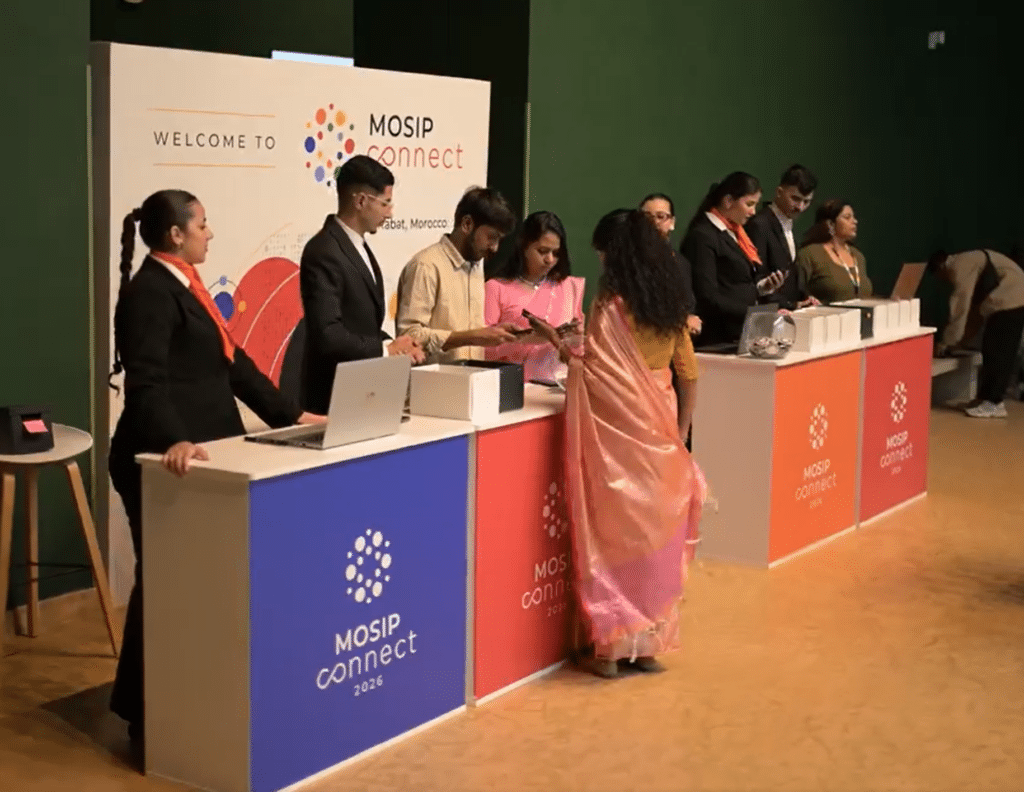
Sustainability and expansion are high priorities for the future of open-source national ID systems in discussions on the first day of MOSIP Connect 2026.
Nearly 500 attendees from close to 40 countries have gathered at University Mohammed VI Polytechnic (UM6P) in Rabat, Morocco for the event. It runs Wednesday, February 11 to Friday, February 13.
Adoption of the program has grown significantly since last year’s event in Manila, Philippines. MOSIP is up to 29 signed MoUs with countries so far. Most are in the Asia-Pacific region and Africa, and six are in Latin America.
Prof. Debabrata Das, MOSIP chairman, made the point that creating open-source projects means sharing more than code. The research and experiences that led to that code must be part of the package to support efficient development and implementation.
Other projects born out of IIIT-Bangalore are also boosting digital government systems and digital public infrastructure. OpenG2P has been adopted by five countries within the past two years, while the Centre for Digital Public Infrastructure (CDPI) is working with 65 government departments from around the world on implementation roadmaps for DPI.
Kris Gopalakrishnan, chairman of IIIT-Bangalore’s governing body, credited Morocco for using MOSIP to improve its healthcare system, and predicted that DPI will soon spread more meaningfully to developed countries.
Morocco was the first country to implement MOSIP eight years ago. It has now delivered social support to 26 million people through its MOSIP-based civil registry, including health, social assistance, pensions and unemployment benefits, Director of Information and Communication Systems Abdelhak Harrak said in his keynote.
Commercial concerns and sustainability
MOSIP President Prof. S Rajagopalan directly addressed the sustainability of the MOSIP project, acknowledging that commercial returns from its first 8 years have been “very meagre” considering it now has over 125 commercial partners. This is partly due to the pilot-first approach, but also the size of some of the adopting countries, which now includes island nations of below a million people. “Money cannot be the only motive,” he says.
The last time the digital identity community converged on Morocco, however, for ID4Africa 2020 in Marrakesh, MOSIP had only 40 commercial partners. Rajagopalan expressed his “heartfelt gratitude” to those commercial partners who have joined in the interim, and those who have sustained their involvement on the way to more revenue-generating scale.
One of the biometrics vendors to join MOSIP since 2020 is Next Biometrics.
“Conferences like MOSIP Connect provide a vital forum for governments, technologists, and policy experts to share lessons, advance standards, mitigate spoofing attacks, and reinforce interoperability and cooperation across borders,” says Next Biometrics SVP Digvijay Singh Kanwar. “By leveraging secure and convenient biometric authentication, digital identity systems can become more reliable, efficient, and user-friendly, improving access to essential public services for citizens.”
Kanwar appeared on a panel discussing biometric liveness detection within the MOSIP ecosystem, along with Jay Meier of FaceTec, Henrik Winberg of Precise Biometrics, Arun Ross of MSU and Dr. Roberto Levya Fernandez of ATI. FaceTec and Precise are also both relatively new to the MOSIP ecosystem. The panel was hosted by Biometrics Institute and BixeLab Founder Ted Dunstone.
CDO Nagarajan Santhanam emphasized the different “flavors” of MOSIP implementation that are possible, including green and brownfield projects and those only including the eSignet or Inji platforms. He also noted a trend toward vendor partners pitching MOSIP directly to countries themselves, and then introducing the government to the open-source digital ID organization.
“We’re seeing more and more of this happening; it’s super-encouraging,” Santhanam says.
There are now five countries “accelerating scale” in their implementations and seven which are “implementation ready,” including Nigeria’s largest-yet brownfield project. Cambodia is rolling our only eSignet, while Peru is piloting only eSignet and Inji.
Previewing MOSIP’s next steps
MOSIP’s planned country council has risen as a priority, Santhanam says, and is expected to launch in 2026.
Other next steps MOSIP is prioritizing include reducing user friction in the system, unlocking further value with out-of-the-box integration features and standards for interoperability, according to CTO Ramesh Narayanan.
Capacity building efforts are ongoing. MOSIP has now trained more than 1,740 people from 85 countries through its Academy.
The focus on practical use cases and passing knowledge from those furthest along in the process continue to increase as well. Country pavilions have joined the biometrics and digital ID technology providers and DPG pavilions in the MOSIP Connect expo for 2026. Keynotes from Ugandan and Ethiopian government officials and a fireside chat on Aadhaar shared digital identity implementation experiences.
Biometric Update’s coverage from live on location in Rabat will continue throughout the event.
Related Posts
-
 March 5, 2025
 -
 February 5, 2026
 -
 January 13, 2026
 -
 April 30, 2025
 -
 February 26, 2025
 -
 August 20, 2025
Article Topics
biometrics | digital ID | digital public infrastructure | MOSIP (Modular Open Source Identity Platform) | MOSIP Connect 2026 | national ID | open source

Comments