
US Justice Department’s search of reporter’s phone, laptops raise biometric, privacy concerns
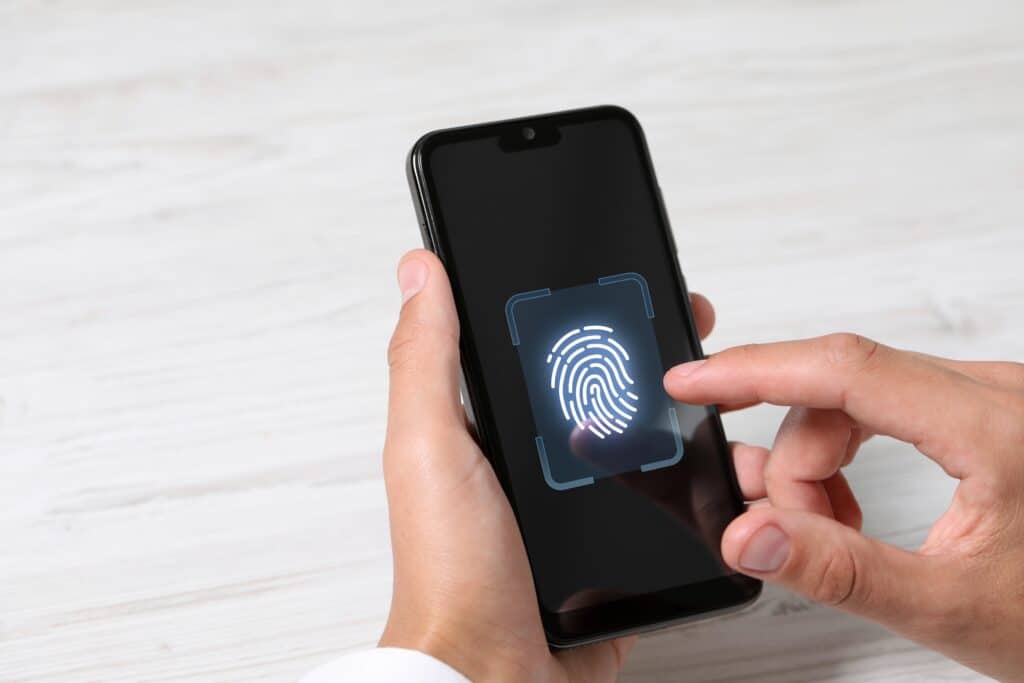
When federal agents searched the home of Hannah Natanson, they were not just pursuing a leak investigation. They were taking custody of biometric-protected devices that collectively contain years of confidential reporting, source relationships, and personal data, raising acute privacy concerns that extend far beyond the alleged disclosure at the center of the case.
Natanson, a reporter for The Washington Post, is not accused of wrongdoing. Her devices were seized as part of a Justice Department investigation into Aurelio Luis Perez-Lugones, a Pentagon contractor charged with improperly retaining and transmitting sensitive Defense Department materials.
Prosecutors allege Perez-Lugones unlawfully shared classified information with a journalist, prompting authorities to seek evidence from Natanson’s reporting devices.
According to court filings by the Post, federal agents executed a search warrant authorizing the seizure of digital devices “reasonably believed” to be used by Natanson. The search resulted in the removal of multiple items central to her reporting work, including a Post-issued iPhone, two MacBook Pro laptops, a portable hard drive, a smartwatch, and a newsroom voice recorder.
“This is the first time in U.S. history that the government has searched a reporter’s home in a national security media leak investigation, seizing potentially a vast amount of confidential data and information,” Reporters Committee for Freedom of the Press President Bruce D. Brown said in a statement.
“The move imperils public interest reporting and will have ramifications far beyond this specific case. It is critical that the court address the profound threat to the First Amendment posed by the raid,” Brown said.
Reporters Committee attorneys also filed an application to unseal all of the court records related to the search warrant, arguing that the government “cannot justify wholesale secrecy here, where the public’s ability to understand a search with serious consequences for a free press is at stake, and where any basis for secrecy is undercut by the information that is already public.”
The Post has argued to the court that the warrant functioned as a sweeping seizure of a reporter’s entire digital workspace rather than a narrowly tailored effort to obtain evidence tied to a single alleged source.
The real danger, the Post contends, is not the seizure itself, but how modern digital forensics turns biometric-protected reporting devices into searchable archives, placing years of confidential source relationships, unpublished journalism, and deeply personal information at risk far beyond the scope of the alleged leak under investigation.
In earlier eras, searches involving journalists focused on discrete items like a reporter’s notebooks, documents, call logs, or individual files.
But today, the reporter’s phone and computer are not just tools of communication, they are biometric-locked identity systems that unify work product, personal life, authentication credentials, cloud access, and years of historical data in a form designed to be efficiently searchable once accessed.
That shift is what gives the Natanson case its broader significance. Digital forensics does not require investigators to scroll through a phone or laptop like a human user. Instead, standard practice is to preserve data by creating forensically defensible copies and then process those copies so their contents can be parsed, normalized, and indexed.
Emails, documents, chat databases, attachments, system logs, and application data can be transformed into structured datasets that allow rapid searching by name, date, keyword, or identifier. In routine criminal cases, that capability is treated as an efficiency gain. But when it involves a journalist, it changes the nature of the intrusion.
Once a device is ingested into a searchable forensic environment, investigators can traverse years of unrelated material in minutes, even if the warrant nominally limits what may ultimately be used. Court filings emphasize that one of the seized items was a Post-owned iPhone used for reporting.
In practical terms, that device is not simply a handset. It is a credential hub. It typically holds access to work email, newsroom systems, encrypted messaging platforms, cloud storage, contacts, and authentication tokens that open other services without requiring passwords.
Forensic processing of such a device would ordinarily focus on extracting communications, files, and application data, then organizing those artifacts into a searchable case file.
Even where message content is encrypted end-to-end in transit, phones can still retain locally stored messages, attachments, contact identifiers, timestamps, notifications, and metadata that reveal who communicated with whom, when, where, and how often.
The Post argues that this risk is especially acute because Natanson’s devices housed encrypted communications used to interact with more than 1,100 sources.
From a privacy and press freedom perspective, that means the seizure of a single phone has the potential to expose an entire reporting network, most of which is unrelated to the alleged leak under investigation.
Biometric authentication magnifies that exposure. Phones protected by facial recognition or fingerprint unlocking are designed for frictionless access. In a search context, that convenience can erase the practical barrier between possession and access, turning a seized device into an immediately navigable archive rather than a sealed container awaiting later judicial review.
The seizure of two MacBook Pro laptops – one newsroom-issued and one personally owned but used for work – raises similar concerns at even greater scale. According to the court filings, those devices contained tens of thousands of newsroom emails, drafts and notes, communications with colleagues, and access to content management systems housing articles in progress.
From a forensic standpoint, laptops are often where review becomes most automated. Once a copy of a laptop’s storage exists, investigators can index the entire file system and rapidly surface documents containing particular names, phrases or identifiers, or filter by creation and modification dates.
Email archives and attachments can be searched in bulk. Deleted or residual data may also be recoverable depending on system configuration. The seized portable hard drive deepens the concern.
External drives frequently function as long-term repositories for journalists, holding archives of old drafts, audio recordings, source materials, and historical projects that may no longer reside on an active device.
Ingesting such a drive into a forensic system can effectively place years of unpublished reporting and confidential relationships into a searchable environment, regardless of their relevance to the investigation at hand.
The Post characterizes the government’s approach as seizing a haystack to find a needle. The alleged misconduct involves a limited number of documents and a single suspected source, yet the seized devices contain years of unrelated reporting data, communications with hundreds of sources, and deeply personal information.
The warrant, as described in the filings, includes temporal and subject matter boundaries, but the newspaper argues it lacks a sufficiently strict search protocol to prevent exposure of newsgathering materials and confidential relationships unrelated to the alleged disclosure.
The Post filed a motion on Jan. 21 asking the U.S. District Court for the Eastern District of Virginia to order the government to return the property seized from Natanson’s home or, at the very least, return the seized materials that are beyond the scope of the search warrant.
U.S. Magistrate Judge William B. Porter quickly issued an order blocking the government from searching the devices until the litigation is settled.
Without rigid, enforceable limits on how data may be processed and reviewed, forensic analysis is not a narrow keyhole search. It is a systematic ingestion of a person’s digital life into a database optimized for discovery.
Investigators can pivot quickly from one identifier to another, from one contact to a broader network, from one document to all related drafts and attachments.
The filings also underscore that the seized devices contain personal information unrelated to reporting, including medical, financial, and family materials.
Automated forensic processing does not distinguish between personal life and professional work. It extracts and indexes data indiscriminately, leaving it to later review stages to determine what should never have been captured in the first place.
The government has indicated that it moved to extract and preserve data from the devices while disputes over protections were still unfolding.
Once preserved copies exist, the central question shifts from whether a search will occur to who controls access, how filtering will be performed, and whether the harm to confidentiality and trust can realistically be undone.
The Natanson case arrives at a moment when biometric authentication, cloud synchronization, and automated indexing have collapsed identity, access, and memory into single devices.
Traditional press protection doctrines were built for an analog or early digital world in which work product could be isolated and reviewed piece by piece. They were not designed for biometric locked ecosystems that function as comprehensive archives of a person’s associations and activity.
If courts accept broad device seizures with loosely defined forensic protocols in cases like this, the precedent will extend well beyond one reporter or one newsroom.
It will normalize a model in which the government can seize a journalist’s biometric-protected digital life, convert it into a searchable evidence database, and only afterward litigate what it was entitled to examine.
Related Posts
-
 November 13, 2025
 -
 February 24, 2025
 -
 February 4, 2025
 -
 January 21, 2026
 -
 July 10, 2025
 -
 January 12, 2026
Article Topics
access control | biometrics | data privacy | facial recognition | fingerprint biometrics | forensics | law enforcement | mobile biometrics | smartphones | U.S. Government

Comments