
TSA plans new biometric buildout for airline crew access lanes
The Transportation Security Administration (TSA) is seeking to expand its use of touchless identity verification technology at airports through a sole-source modification to an existing contract with ReliaSource, a minority woman-owned HUBZone small business based in Baltimore, Maryland.
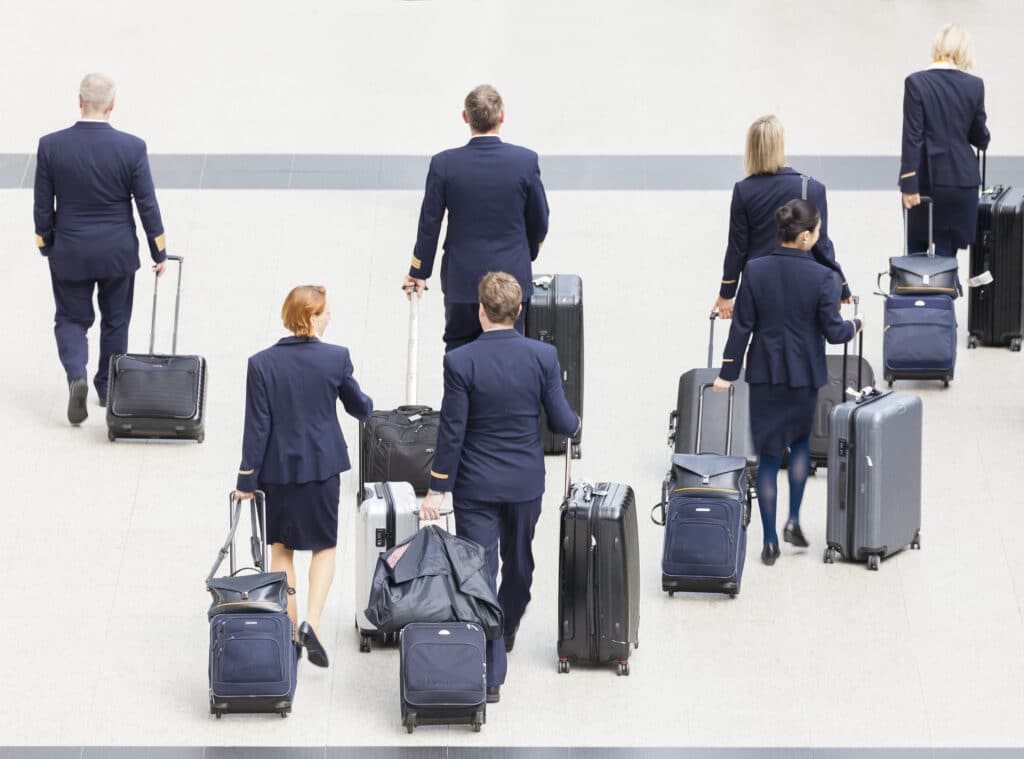
The agency says the change would add more biometric identity verification units to support its Crewmember Access Point (CMAP) lanes, which are TSA’s dedicated lanes for eligible airline crew.
CMAP lanes are the successor to the Known Crewmember program and are designed to give opted-in pilots and flight attendants expedited access to sterile areas at participating airports, with added biometric identity verification as part of the screening process.
TSA’s new award justification ties it to its takeover of the Known Crewmember program from Airlines for America (A4A), the transition to which has been in the works for years.
TSA says the current contract under which A4A still helps oversee or support the program is set to expire, and that it wants its own biometric crew screening infrastructure in place before that happens, ideally by December to avoid disruption.
TSA says using a different contractor could jeopardize that schedule and create gaps in coverage at CMAP locations.
“The new CMAP, when implemented, will provide opted-in, eligible crew members with expedited access to the sterile areas at participating airports. This change represents a broad security enhancement and is not predicated upon a single prohibited item or vulnerability,” TSA said in January 2025.
The new procurement is being handled through the General Services Administration’s (GSA) Federal Supply Schedule program as a modification to an existing task order, rather than as a new full competition.
Although several pricing and performance details are redacted in the justification document, public award data indicates the follow-on modification is worth about $1.25 million, which is an increase from an original value of $2.6 million to $3.8 million. The original contract was awarded in September 2025.
According to the justification, the modification would cover the equipment itself, along with warranty and shipping, deployment work to install and configure the units at CMAP locations, field support during deployment, and hardware and helpdesk support during option periods.
TSA argues that the order should be issued on a sole-source basis in the interest of economy and efficiency because it is a logical follow-on to an already competitively awarded Federal Supply Schedule order.
The justification says the original task order had already been competed through GSA e-Buy, with three vendors submitting quotes, and that the new purchase would simply increase the number of units under the same technical and deployment framework.
Agency officials say using the same contractor preserves continuity in the technical architecture, deployment approach, warranty structure, and support model already in place.
TSA says the CMAP touchless identity solution is based on a specific Department of Homeland Security Science and Technology Directorate-approved hardware configuration that includes Dell tablets, FLIR cameras, Kowa lenses, and that TSA’s own applications and integrations were built around that combination.
It also says ReliaSource and its subcontractors, including Louisville, Colorado-based Kiosk Information Systems and Dell Federal Systems, are already producing and deploying that validated configuration under the existing task order.
TSA says switching contractors or recompeting the work would require duplicative mobilization and coordination at airports, increasing cost and operational risk.
The new devices support TSA’s statutory responsibilities under the Implementing Recommendations of the 9/11 Commission Act by providing biometric verification at CMAP lanes, strengthening IT security controls and data access, increasing crewmember compliance with TSA regulations and policy, and helping ensure air carrier compliance with TSA policy.
TSA says it conducted additional market research in February and concluded that modifying the existing touchless identity solution contract to procure additional kiosks was the only option that could meet CMAP requirements within available funding and time constraints.
At the same time, TSA’s justification document indicates the agency has not closed the door on future competition. It says the original procurement was structured to encourage small business participation, that a Request for Information was issued to identify capable sources, and that multiple authorized resellers on the GSA Schedule can competitively supply some of the underlying brand name hardware components.
Related Posts
-
 July 24, 2025
 -
 January 14, 2026
 -
 February 4, 2026
 -
 October 30, 2025
 -
 June 4, 2025
 -
 December 4, 2025
Article Topics
airport biometrics | biometrics | GSA | identity verification | procurement | ReliaSource | TSA

Comments