
Wearable AI brings new promise and new risks to emergency response
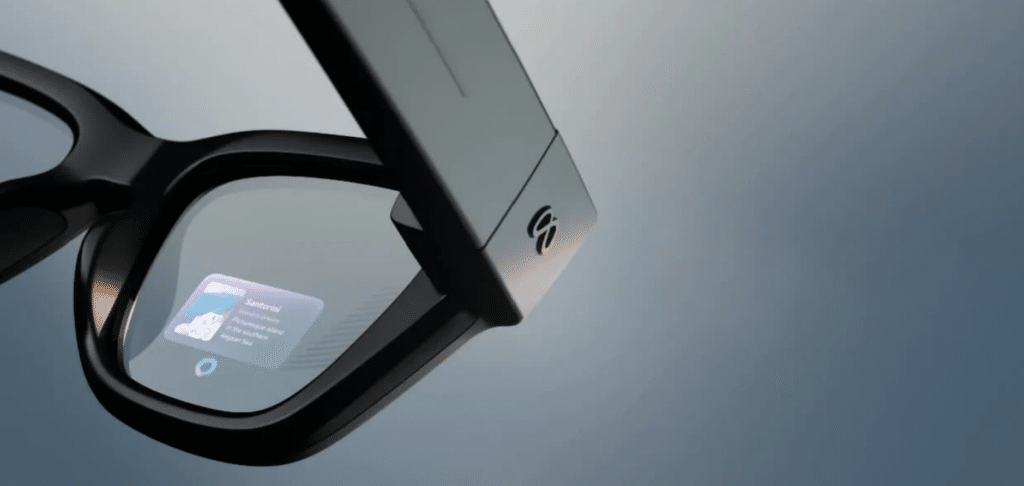
A new report from the Information Technology and Innovation Foundation (ITIF) makes an expansive case for wearable AI in emergency response, arguing that smart glasses, watches, rings, and helmets could improve safety, decision making, and coordination across the full emergency services ecosystem.
The report, The Promise of Wearable AI: Opportunities Across Emergency Response, presents the technology as the next major layer of hands-free digital assistance for law enforcement, firefighters, emergency medical technicians, 911 personnel, and disaster responders.
But the report also arrives at a moment when smart glasses are increasingly tied not just to first responder efficiency, but to biometric surveillance and immigration enforcement, raising sharper questions about where public safety ends and civil liberties concerns begin.
ITIF says wearable AI can process data from users and their environments to produce real-time insights and decision support. In the report’s framing, the appeal is straightforward: emergency responders often work in high-stress, low-visibility, rapidly changing environments where looking down at a phone, laptop, or dashboard is impractical or dangerous.
Wearable AI, ITIF argues, could allow responders to receive information, record events, monitor health indicators, and communicate with command staff without taking their hands or eyes off the situation in front of them.
The report places particular emphasis on law enforcement. ITIF says wearable systems could monitor officers’ stress, heart rate, exertion, and sleep, all of which it frames as relevant to decision making and wellness in a profession marked by repeated exposure to trauma and physical strain.
Smart glasses, the report says, could add navigation, language translation, and facial recognition, helping officers identify suspects, missing people, or witnesses in crowds.
It also treats body-worn cameras as a form of wearable AI, noting that AI tools can already be used to generate speech-to-text transcripts, flag keywords, and analyze footage for training and accountability purposes. In ITIF’s telling, these tools promise more crimes solved, more efficient deployments, and better officer and community safety.
Firefighting is another major focus. ITIF argues that wearable AI could be especially useful in smoke-filled, heat-intensive and structurally unstable environments where situational awareness is often degraded.
The report points to wearables that can detect toxic gases, radiation, and extreme temperatures, as well as devices that monitor oxygen levels and other vital signs so commanders can intervene before responders reach dangerous thresholds.
It highlights smart helmets that combine thermal imaging, radar, and other sensors to help firefighters navigate low-visibility conditions and locate victims faster. The report also describes AI glasses as a possible tool for navigation, communication with off-site experts and equipment inspection.
For EMS and emergency healthcare personnel, the report argues that wearable AI could support faster triage and better patient assessment in chaotic field conditions and says AI-equipped wearables could gather vital signs such as heart rate, respiratory rate, and oxygen saturation, combine them with patient history and help responders identify subtle signs of deterioration.
It also points to hands-free video links with remote physicians, real-time language translation, and geolocation services as potential benefits.
At the same time, the report acknowledges that this use case raises acute privacy concerns because EMTs and paramedics handle highly sensitive health information that may fall under existing legal protections such as HIPAA.
Beyond these core first responder groups, ITIF extends the argument to 911 dispatchers, natural disaster response teams, lifeguards, park rangers, and water rescue personnel.
The report notes that consumer wearables already place emergency calls and that smart devices may account for a growing share of 911 contacts. It argues that wearables could also help detect falls, irregular heart rhythms, distress in swimmers, and dangerous conditions in large-scale disaster environments.
In other words, ITIF is not describing a niche product category, but rather a broader shift in how emergency response information is gathered, shared, and acted on.
Still, the report is not blind to the barriers. It notes that emergency services agencies often face staffing shortages, retention problems, budget constraints, and uneven training capacity, especially in rural areas.
It also points to the red tape involved in certifying new equipment for official use, the difficulty of integrating new technologies into legacy workflows, and the possibility that the burden of managing new systems could reduce efficiency for personnel already stretched thin.
Those constraints matter because they suggest the future of wearable AI in emergency response may be determined as much by procurement policy, grant funding, and interoperability standards as by the technology itself.
The deeper tension in the report lies in its treatment of risk. ITIF acknowledges concerns over privacy, legal liability, cybersecurity, authentication, and data misuse, including concerns specific to police surveillance.
Public safety agencies, it notes, handle sensitive information ranging from geolocation data to crime scene evidence and health data.
Yet, the report ultimately argues that these risks are manageable and should not become a reason to block adoption, even pushing back on calls to ban facial recognition functions in body-worn cameras and related systems.
Instead, it recommends more research funding, more training, stronger cybersecurity requirements, comprehensive federal privacy legislation, and better interoperability among emergency services systems.
That policy argument lands in a much more politically charged environment than the report sometimes suggests. As Biometric Update reported this week, the Department of Homeland Security’s Fiscal Year 2027 budget includes plans to develop an operational prototype of smart glasses enabling biometric identification in the field.
The effort is part of a broader biometric and identity technology buildout, with operational prototypes designed to give agents real-time access to information and biometric identification capabilities in the field.
That is significant because it places smart glasses not only in the context of fire scenes and ambulance triage, but also inside the machinery of immigration enforcement.
Outside trade and policy circles, that same development has drawn far harsher reactions. That contrast captures the fault line now opening around wearable AI.
For one side, these devices are emerging tools for responder safety, accountability and better decision-making. For the other, they are the natural next step in always-on biometric surveillance.
That is what makes the ITIF report important. It does more than catalog potential uses for wearable AI. It shows how quickly the public safety case for smart glasses and related devices is being formalized at the same time government agencies are moving toward real-world deployment.
The report insists that careful governance can reconcile innovation with privacy and public trust.
But as wearable AI migrates from wellness tracking and industrial assistance into policing, immigration enforcement, and field biometrics, the debate is unlikely to stay confined to questions of efficiency.
It will more likely become a debate over what kind of surveillance infrastructure emergency response should be entrusted with.
Related Posts
-
 November 13, 2025
 -
 January 12, 2026
 -
 March 20, 2026
 -
 August 8, 2025
 -
 February 26, 2026
 -
 September 15, 2025
Article Topics
biometric identification | biometrics | consumer electronics | facial recognition | ITIF | law enforcement | smart glasses | surveillance | wearables

Comments