
Hawaii ID issue shows interoperability matters as digital IDs scale
By Albert Roux, EVP Product for Microblink
Travelers at Hawaii airports recently experienced delays because valid state-issued IDs could not be reliably scanned. Frustrated passengers were pulled aside for additional screening. Security lines slowed, and airport staff were forced to rely on manual ID verification even though travelers were carrying legitimate and acceptable forms of scannable identification.
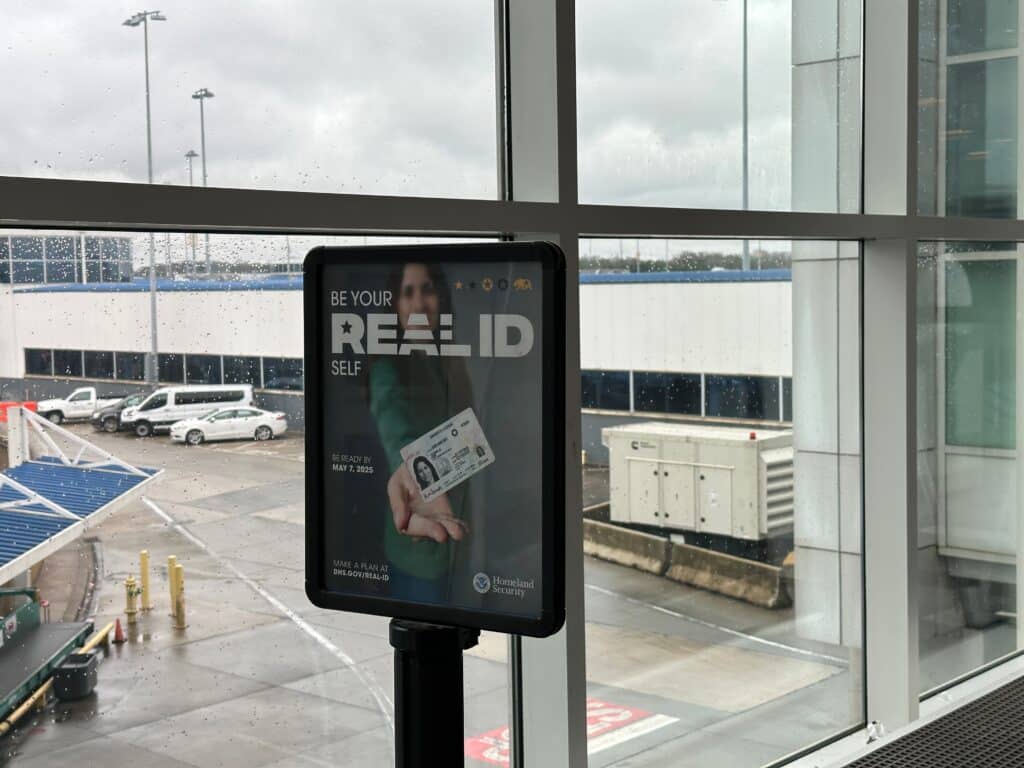
Hawaii’s glitch attracted national attention. Other states have encountered challenges related to identity verification infrastructure, too. Maine, Massachusetts, and New Hampshire reported instances in which some REAL ID-compliant credentials experienced barcode-scanning issues, creating confusion for travelers and adding more work for TSA personnel.
These incidents raise an important question: How can a valid REAL ID encounter verification problems? The answer lies in the complexity of the identity ecosystem itself.
REAL ID helped establish common standards for identity credentials, but the ID holder’s experience depends on how well issuing authorities, scanners, software platforms, verification workflows, and airport operations are synchronized. When one part of that ecosystem falls out of sync, friction in accurate, fast validation becomes apparent quickly.
As digital identity adoption accelerates, that reality deserves greater attention.
REAL ID standardized credentials. It did not standardize the ecosystem
Today, every U.S. state issues REAL ID-compliant credentials. From a policy perspective, that represents a major achievement. Identity verification, however, extends well beyond credential issuance.
Every driver’s license must be recognized by thousands of scanners, kiosks, airport systems, government platforms, and commercial verification solutions operating nationwide. And systems must keep up with changes, such as updated credential designs and newly added security features. As mobile drivers’ licenses from across the U.S. enter the ecosystem, it’s even more difficult for verification systems to keep pace with those changes.
While standards exist for machine-readable elements such as PDF417 barcodes, implementation details differ among issuing authorities. Even relatively small formatting differences or barcode production inconsistencies can create challenges in environments like airport screenings that demand near-perfect reliability. An ID that scans successfully in one location may face problems elsewhere if systems have not been updated to recognize evolving formats.
Keeping a fragmented identity ecosystem aligned is becoming one of the industry’s most important responsibilities.
The traveler only sees the weakest link
Identity verification systems are routinely evaluated under controlled conditions. Airports are anything but controlled.
Checkpoints process thousands of travelers every day under tight time constraints and constant operational pressure. Travelers present worn documents, damaged cards, partially obscured barcodes, and credentials issued by jurisdictions across the country. Few travelers think about document issuers, scanner vendors, or verification software. They simply want and expect the process to work.
When it does not, the impact reaches beyond a delayed traveler. Additional manual reviews slow down checkpoint operations and increase staffing demands. Delays at security lines negatively affect the broader travel experience.
Those disruptions carry real economic consequences. According to research from the U.S. Travel Association, air travelers avoid an average of 2 trips per year due to travel hassles, resulting in an estimated 27 million trips avoided and $71 billion in lost economic activity.
Identity verification is only one piece of that equation, but it illustrates how quickly costly friction can scale when systems are not working together.
ID security and interoperability are now closely connected
For decades, identity verification operated in a relatively stable environment. Credential formats changed infrequently, security features evolved slowly, and verification systems could remain effective for years without major changes or updates.
Today, states continue to modernize driver’s licenses, and mobile driver’s licenses are becoming widespread. Digital identity initiatives are expanding worldwide. At the same time, generative AI has lowered the barrier to creating convincing fake credentials, giving fraudsters new tools to manipulate identity information and challenge verification systems that they didn’t have just a few years ago.
As both credentials and threats evolve more rapidly, adaptability has become a critical requirement. Governments continue to roll out new security features to stay ahead of emerging fraud, while verification providers must ensure that legitimate credentials are recognized quickly and reliably.
Organizations evaluating identity infrastructure should look beyond customary measures, including accuracy and throughput. Long-term performance depends on the ability to support new document formats and distribute updates successfully across large deployments, while responding quickly to developing threats.
The road to digital identity requires closer collaboration
The lessons from Hawaii extend well beyond a REAL ID scanning issue.
The industry is entering a period where physical IDs, mobile driver’s licenses, digital credentials, and future identity technologies will coexist. Travelers will move between physical and digital environments and expect verification systems to work seamlessly across both.
Achieving that vision necessitates closer cooperation between governments, issuing authorities, transportation agencies, scanner vendors, and identity verification providers.
Credential rollouts cannot occur in isolation. Testing must begin earlier. Update cycles need to move faster. Systems should be designed with the expectation that credentials will continue evolving. It takes a team to ensure that valid credentials are consistently recognized, regardless of where they are issued or presented.
A small disruption contains a much larger lesson
A record-setting 904 million travelers went through a TSA checkpoint last year and are predicted to surpass one billion this year. At that scale, even minor verification disruptions might generate meaningful operational and economic consequences.
While the Hawaii scanning issue may ultimately be remembered as a relatively small event, it’s worth understanding what the experience revealed about the larger identity ecosystem. Credential issuance, verification technology, update cycles, and operational preparedness are growing more interconnected. As digital identity adoption expands, progress will depend on systems that can evolve strategically alongside changing credentials and arising threats while adequately meeting user expectations.
REAL ID established a foundation for standardized credentials. The next phase of the industry’s work centers on interoperability and the ability to adapt as identity continues to evolve.
About the author
Albert Roux, EVP Product for Microblink, leads the strategic development and execution of the organization’s identity-focused product initiatives, ensuring the company continues to deliver high-quality, secure solutions to its global clients. He oversees Microblink’s product team, leveraging over 20 years of experience at companies like Microsoft, Criteo, Bureau, and Onfido to build systems and teams that effectively tackle fraud across various industries. A renowned speaker and trainer, Albert previously educated international law enforcement agencies on advanced fraud detection techniques. Growing up, Albert wanted to be a park ranger, safeguarding the wilderness. Now, he protects our digital landscapes, ensuring they remain safe havens from the threats of fraudsters.
Related Posts
-
 April 24, 2026
 -
February 23, 2026
-
 February 9, 2026
 -
 March 10, 2026
 -
 August 19, 2025
 -
 December 18, 2025
Article Topics
biometrics | digital ID | Hawaii | identity verification | interoperability | Microblink | Real ID

Comments