
CertaScan infant biometrics footprint system installed at 3 Florida hospitals

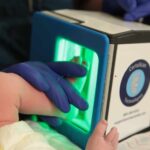
Infant biometrics company CertaScan Technologies has deployed its proprietary infant safety system at a trio of hospitals in Palm Beach, Florida. South Florida Hospital News says the Good Samaritan Medical Center, St. Mary’s Medical Center and West Boca Medical Centers have all installed the system, which allows hospitals to capture high resolution newborn footprint scans that can be used for precise identification in situations like an abduction, lost baby or natural disaster.
Per the report, the National Center for Missing and Exploited Children (NCMEC) recommends CertaScan’s Newborn Safety System in hospitals. As of October 2025, the Stamford, Connecticut-based company had enrolled 1.5 million babies born in the U.S. enrolled into its newborn footprinting system. Their bundled hardware, software and services are in use at 160 birthing hospitals around the U.S.
Ricky Ramirez, chief operating officer at St. Mary’s Medical Center and Palm Beach Children’s Hospital, says that “while we take every precaution to ensure every patient’s safety, the Infant Safety System is an extra layer of protection that we can offer families.”
“From advanced infant monitoring systems to biometric identification technology, we are committed to creating the safest possible environment for mothers and babies.”
For digital capture, CertaScan’s system uses a footprint scanner from Accutech Security.
Its LiveScan high resolution image capture technology presumably tackles technical challenges with scanning infant biometrics, such as small ridge spacing and soft, malleable skin. The system, which comes with free installation and service, also includes the option of adding security photos and a mother’s index fingerprint.
The question of safety – and privacy – takes on extra urgency when infant biometrics are involved. CertaScan says footprints are stored in an infant’s electronic medical record and in a secure, cloud-based database. The company’s website says its products are compliant with the latest NCMEC Infant Security Guidelines and demonstrate enhanced compliance with the Joint Commissions’ Patient Identification standard.
A unique biometric that can be referred to throughout an individual’s healthcare history is particularly advantageous in regions where identity documentation is inconsistent. While not as applicable in the U.S., according to Unicef, 150 million (around 2 in 10) children under five remain unregistered and invisible to government worldwide. This can have a major impact on things like vaccinations, immunization and aid or food subsidiary programs.
CertaScan is not alone in having recognized the market potential. Recent research from UK infant biometrics startup Simprints pitches it as “the only biometric system tailored to emerging markets.” And U.S. company Synolo has been making inroads in Brazil, which has become the world’s first major market for infant biometrics. Both Simprints and Synolo use fingerprints, rather than footprints. Likewise with Integrated Biometrics, which offers its InfantID fingerprinting product. NEC has also run trials of infant biometrics capture in Kenya.
Related Posts
-
 October 17, 2025
 -
 December 1, 2025
 -
 November 13, 2025
 -
 December 5, 2025
 -
August 6, 2025
-
 December 16, 2025
Article Topics
biometrics | CertaScan Technologies | digital footprint | Florida | identity management | infant biometrics | patient identification

Comments