
Federal prisons turn to biometric monitoring for reentry programs
The U.S. federal Bureau of Prisons (BOP) is asking private industry and community groups to propose new ways of running home confinement. In a Request for Information (RFI), the bureau has asked for feedback on whether technology, virtual supervision, and hybrid service models can substitute for traditional halfway houses and day-reporting centers.
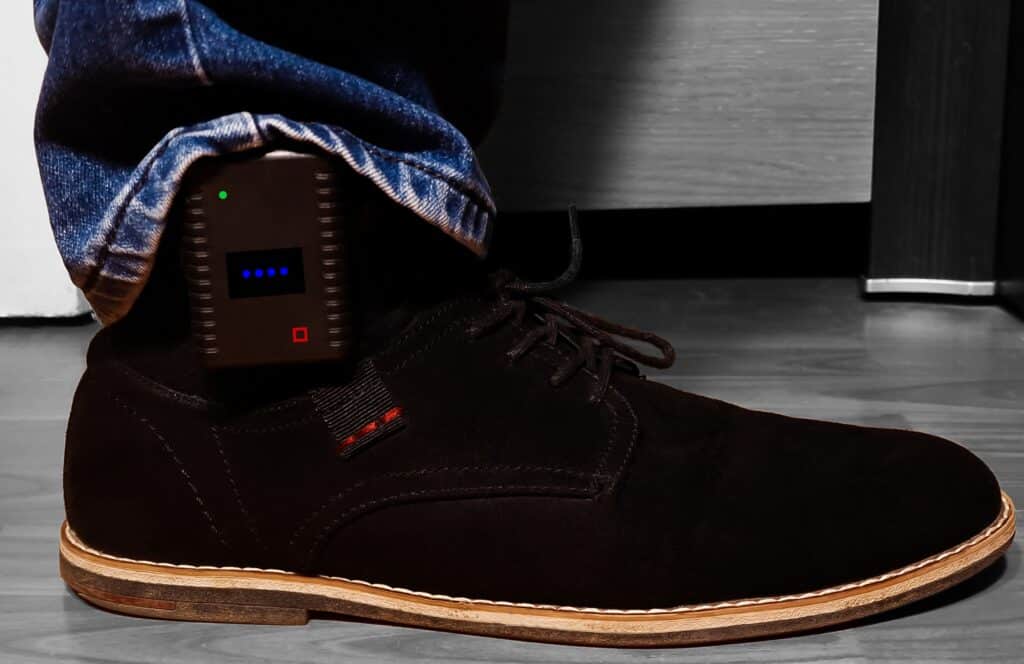
The RFI highlights biometric tools such as geofencing, video check-ins, and electronic bracelets as potential compliance measures. Industry already markets smartphone apps that use facial recognition and liveness detection, along with GPS-enabled wearables and geofencing dashboards.
Responses to the RFI are due by the end of September, and the feedback will inform whether it pursues pilot programs or formal contracts in the future.
The inquiry reflects longstanding strains in the federal corrections system. Rising contractor costs, limited facility availability in rural areas, and growing demand for pre-release placements have stretched BOP’s existing model. Congress has meanwhile expanded eligibility for home confinement under the Second Chance Act (SCA) and the First Step Act (FSA) both designed to ease the transition from prison to community life.
Implementation, however, has been uneven. A 2023 Government Accountability Office review found that BOP’s First Step Act rollout lacked key data and oversight, making it harder to evaluate results and ensure consistency. Halfway houses themselves have faced scrutiny for high per-diem costs, inconsistent programming, and weak accountability.
Against that backdrop, BOP is weighing whether biometric and electronic monitoring can provide more flexible, less costly alternatives. “The bureau is committed to ensuring safe and effective reentry services while addressing growing fiscal constraints,” the RFI states.
The Second Chance Act expanded the use of residential reentry centers and mandated job training and mentoring programs. The First Step Act built on that framework by authorizing longer community placements for certain individuals, particularly the elderly and medically vulnerable.
During the COVID-19 pandemic, BOS relied chiefly on emergency authority granted by the CARES Act to move thousands into home confinement, in parallel with FSA and SCA provisions.
By January 29, 2022, more than 31,500 people were on home confinement, up from roughly 3,000 before the pandemic; CARES Act transfers totaled 4,352 between October 2020 and January 2022.
Overall, more than 12,000 people were released under CARES authority, with only 27 returned for new crimes.
For corrections officials, biometric monitoring systems promise real-time accountability, scalability, and reduced staffing needs. But civil liberties advocates see risks. The American Civil Liberties Union (ACLU) has described electronic monitoring as a form of “digital imprisonment,” warning that malfunctions, restrictive rules, and intrusive data collection can turn homes into “e-carceration” sites.
Critics also caution that outsourcing biometric monitoring to private contractors may replicate the same accountability problems that have plagued halfway houses. Worth Rises, a nonprofit that tracks the corrections industry, has documented how supervision contracts create incentives to extend monitoring and expand surveillance footprints.
The RFI emphasizes direct cost savings, scalability, and reduced administrative burdens. It asks stakeholders to outline how virtual services such as telehealth, employment counseling, and case management could be delivered in-home, and how outcomes could be measured transparently.
Advocates argue that cost savings must not come at the expense of civil rights. Studies show people of color are disproportionately subjected to electronic monitoring in local jurisdictions, and technical glitches can result in sanctions or reincarceration even when no violation occurred.
“These tools can fail in ways that punish the poor and marginalized the most,” the ACLU warned in a 2022 report on e-carceration. A missed GPS ping or a faulty biometric scan, advocates say, should not be the difference between staying home and returning to prison.
The debate mirrors broader questions about corrections policy and whether the U.S. can reduce costs and ease reentry without normalizing surveillance. For supporters, technology represents a pragmatic bridge between incarceration and reintegration. For opponents, it risks embedding a new layer of carceral control in everyday life.
Related Posts
-
 February 24, 2025
 -
 October 8, 2024
 -
 September 16, 2024
 -
 September 26, 2024
 -
 January 6, 2025
 -
 January 29, 2025
Article Topics
biometric monitoring | biometrics | prisons | RFI | tender | U.S. Bureau of Prisons | U.S. Government

Comments